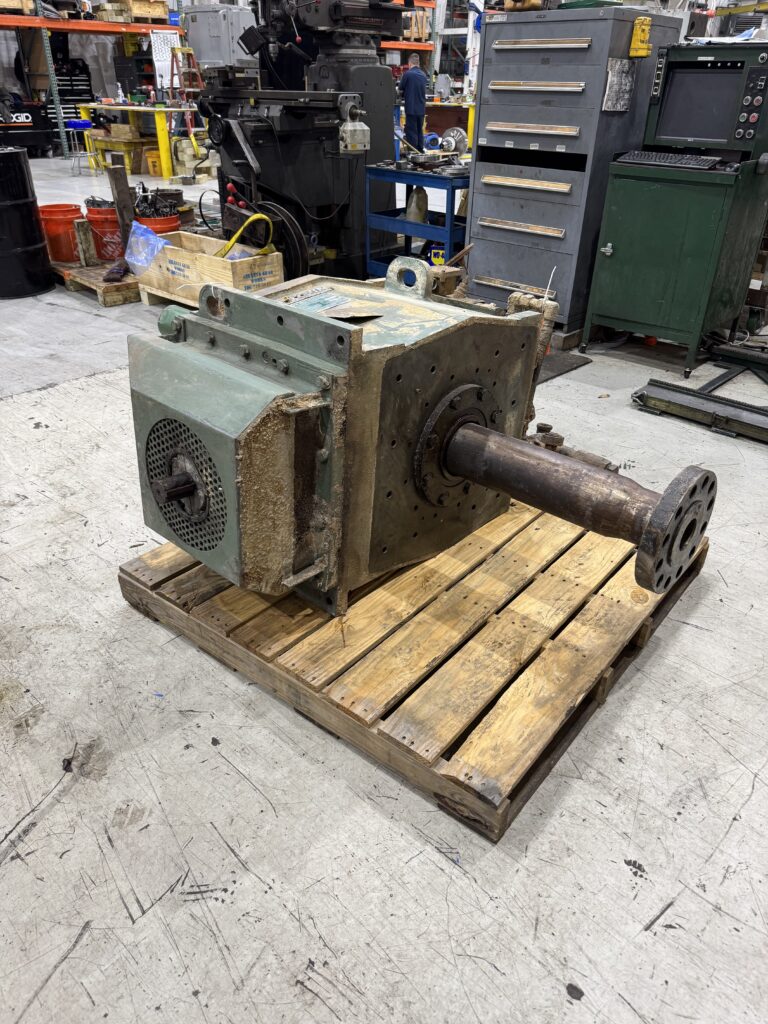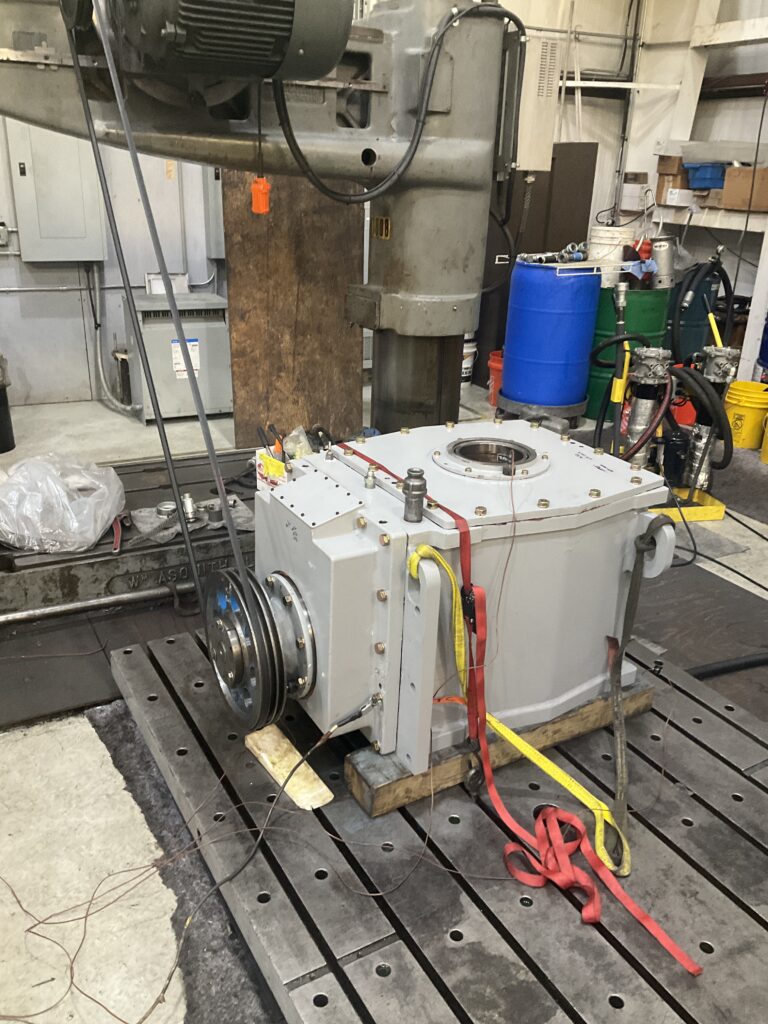
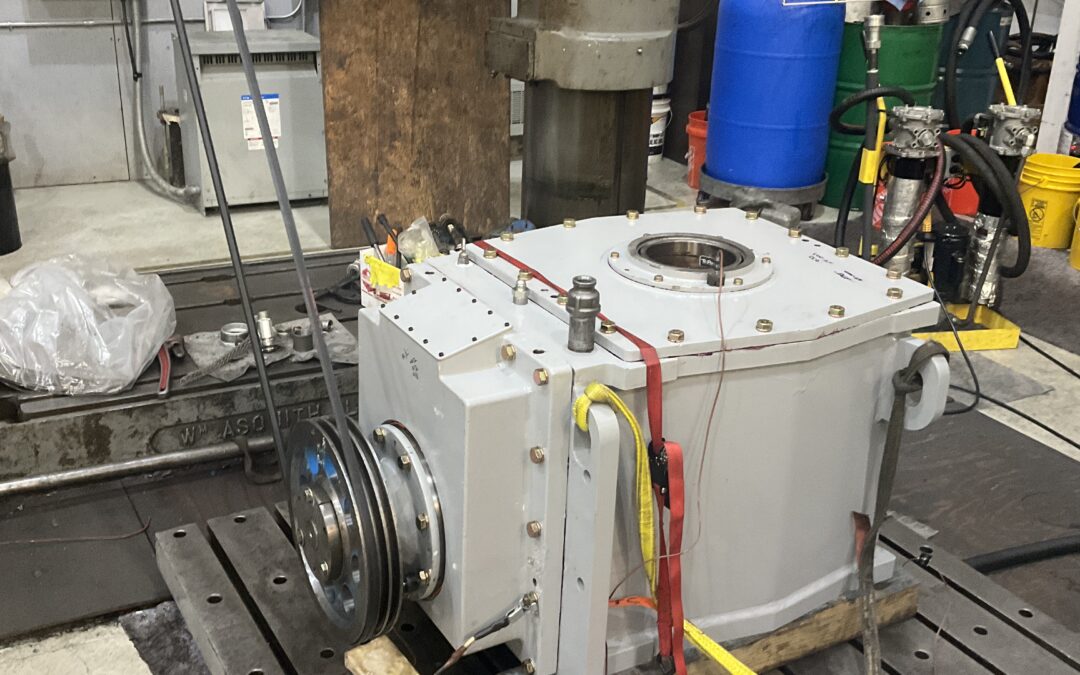
The call came in unexpectedly to our sales rep. A crucial Lightnin 780 mixer gearbox was in total failure and had shut down a line at a nearby specialty polymers plant. Knowing the cost of lost production time but not the extent of the damage in the failed unit, the customer‘s reliability engineer needed the repair completed in three days.
“Of course, I said yes,” said Account Manager Alan Armstrong. “Normally that would be at least a two-week job, but emergencies are what we do, and we’re very familiar with the Lightnin brand.”
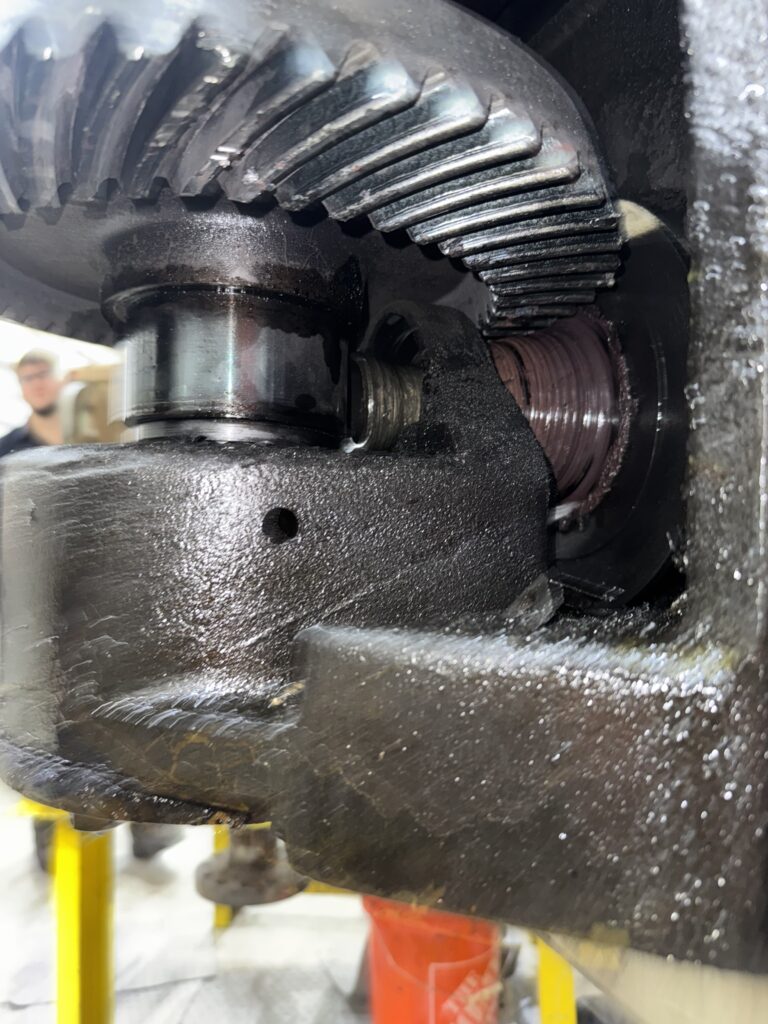
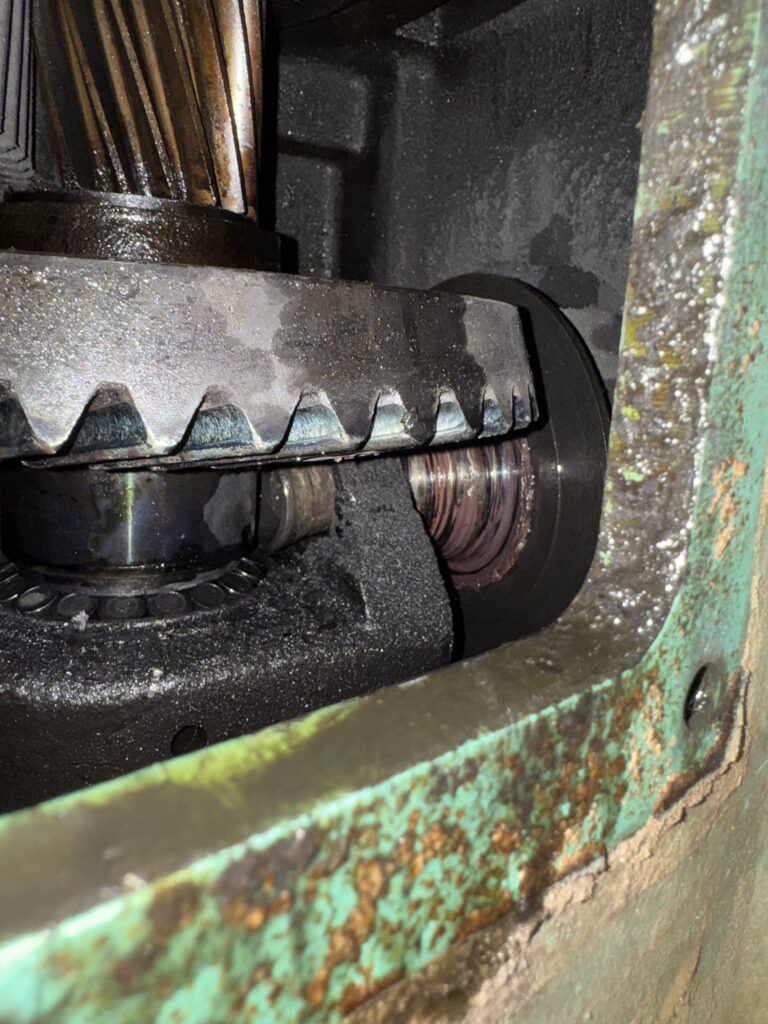
When the gearbox arrived at our shop, the team assigned to the job, led by Senior Engineer Taylor Sims, immediately began disassembly and inspection. They quickly discovered the complete destruction of all the gears.
“They needed it back ASAP to return to normal operations,” said Taylor, “but the state of the internal components made it impossible to get them back something immediately. In fact, so many teeth were missing from the gears there was really nothing left to work with.”
But not meeting the desperate customer’s deadline wasn’t option. So, we quickly procured a surplus Lightnin 780 gear drive from one of our distributors and got to work.
Why had the Lightnin 780 failed?
The Lightnin 780 is a heavy-duty, industrial speed reducer designed specifically for top-entering mixers and agitators, engineered for large-scale, highly demanding mixing applications like chemical processing, water treatment, mining and pharmaceutical fermentation. In this case, it was used to mix chemicals at a specialty polymers plant.
Specialty polymers plants are among the harshest in industry due to extreme processing temperatures, highly corrosive chemical reactants (such as strong acids and fluorinated compounds), elevated operational pressures and the constant threat of volatile dust and toxic vapor explosions.
Specific causes of gear drive failure include corrosive wear, inadequate or contaminated lubrication, seal degradation, overloading and shock loads, improper shaft alignment and installation, and thermal stress. Often pushed to its highest limits , this gearbox subjected to parameters exceeding the design requirements was destined to fail at some point.
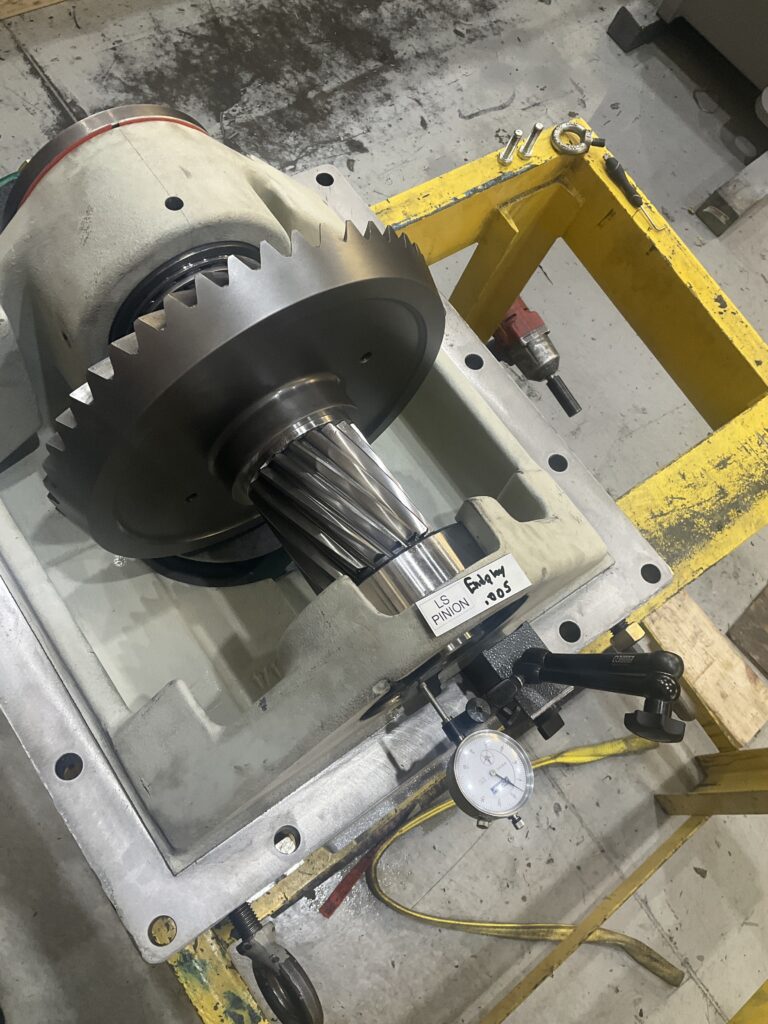
Our immediate goal was to retrofit the surplus Lightnin 780 to equal or better quality than OEM in three days and later rebuild the original to the same standard.
Retrofitting the surplus gearbox in two major steps.
Lightnin 780 units are custom-matched to specific mixing loads, speeds and vessel geometries. The surplus unit came complete with all the shafts and gears assembled, but it had an incorrect ratio. In other words, its internal gearing was improperly sized for the customer’s specific application. It also lacked a lubrication system.
“The required ratio was 21.1:1, but the surplus gearbox ratio was 17.4:1,” said Taylor. “This is an increase in gearbox ratio of 17.5%. if the customer operated the surplus gearbox at the same RPM as the original gearbox, the driven mixer would have rotated too fast for the application.”
That would risk causing production bottlenecks, overheating, torque loss, premature wear and motor burnout.
“To adjust to this ratio difference and allow the surplus gearbox to achieve the same output RPM as the original, we advised the customer to slow the drive motor using the VFD (Variable Frequency Drive) that was already on the controls of the machine the gearbox goes into.”
Our second step was to install the proper lubrication system. With no time to order a new one, we simply removed the lube system from the original gearbox and installed it in the surplus unit.
“The lubrication system components were mounted to a piece of plate in the old unit,” said Taylor. “We only needed to bolt the plate to the surplus gearbox and make the pipe connections. It was a very simple process.” The new gearbox delivered on time with benefits.
The retrofitted surplus Lightnin 780 was delivered to the customer on time and ready for operation. Since it was a match to the original, the customer had the added benefit of saving time and money by merely “dropping it” into place without changing its baseplate or foundation.
What about the original gearbox?
A month later, we took the normal two weeks to rebuild the original with the correct components and delivered it to the customer as a back-up unit. With the retrofitted surplus unit and the rebuilt original, the customer now had a working Lightnin 780 back on the line in just three days and weeks later a drop-in replacement unit in storage, waiting to take over should the new surplus unit ever need repair.
“If everything is properly maintained and the customer operates the gearbox at the power and rotational parameters that it is designed for, either unit could easily last 50,000 to 100,000 hours,” said Taylor.